
Epidural Steroid Injections: What Patients Should Know
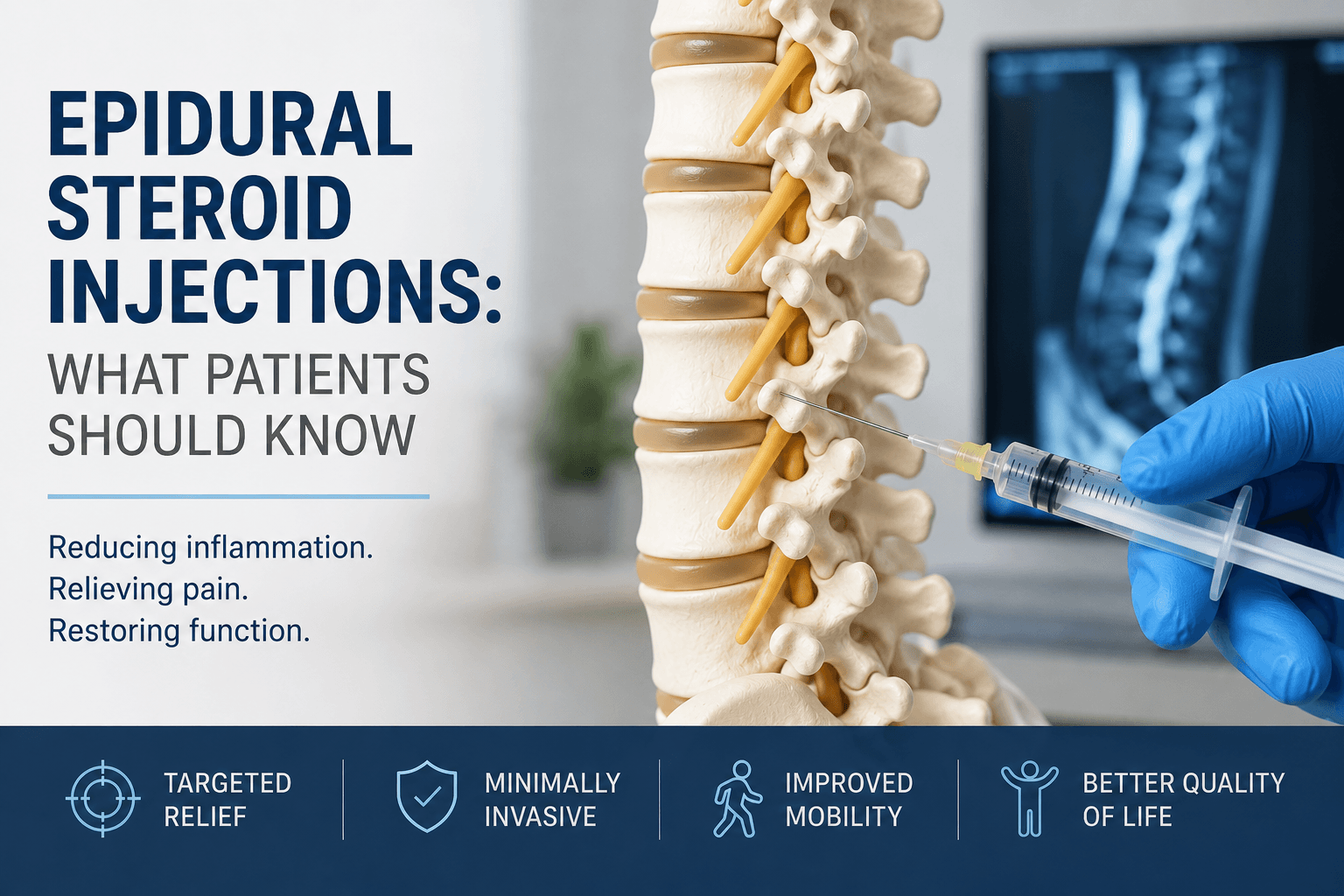
Back or neck pain that travels into an arm or leg can make everyday activities difficult. Sitting, standing, walking, sleeping, and exercising may all become uncomfortable when an irritated spinal nerve is involved.
When conservative treatments do not provide enough relief, a physician may recommend an epidural steroid injection. This minimally invasive procedure delivers medication near irritated spinal nerves with the goal of reducing inflammation and relieving radiating pain.
Understanding how epidural steroid injections work, what they may treat, and what to expect can help patients have a more informed conversation with their pain management physician. If you are still learning about specialized pain care, you may also want to read what a pain management physician does.
What Is an Epidural Steroid Injection?
An epidural steroid injection places medication into the epidural space, which is the area surrounding the spinal cord and spinal nerves.
The injection commonly contains:
- A corticosteroid medication intended to reduce inflammation
- A local anesthetic that may provide temporary pain relief
Epidural steroid injections are different from the epidurals commonly associated with childbirth. Although both involve the epidural space, the medications, purpose, and procedure may be different.
What Conditions May Be Treated With Epidural Steroid Injections?
Epidural steroid injections are generally used when pain is associated with inflammation or irritation of a spinal nerve.
They may be considered for conditions such as:
- Herniated or bulging discs
- Sciatica
- Lumbar radiculopathy
- Cervical radiculopathy
- Spinal stenosis
- Degenerative disc disease
- Pain that travels into an arm or leg
These injections are often more appropriate for radiating nerve pain than for isolated back or neck pain without signs of nerve involvement. Patients experiencing pain that travels from the lower back into the leg can learn more about sciatica pain, its causes, and available treatment options.
How Do Epidural Steroid Injections Work?
When a spinal nerve becomes compressed or irritated, inflammation around the nerve may contribute to pain, numbness, tingling, or weakness.
An epidural steroid injection delivers anti-inflammatory medication near the affected area. Reducing inflammation may help decrease nerve irritation and improve symptoms.
The injection does not repair a herniated disc, reverse arthritis, or eliminate spinal degeneration. Instead, it may create a period of reduced pain that allows a patient to move more comfortably and participate more effectively in physical therapy, exercise, or other parts of a treatment plan.
How Are Epidural Steroid Injections Performed?
Epidural steroid injections are typically performed as outpatient procedures.
During the procedure, the patient is positioned to provide access to the appropriate area of the spine. The skin is cleaned, and a local anesthetic may be used to numb the injection site.
The physician then carefully guides a needle toward the epidural space. Imaging guidance, such as fluoroscopy, may be used to help confirm the needle’s position and accurately deliver the medication.
The procedure itself is usually completed relatively quickly, although preparation and post-procedure monitoring add to the total appointment time.
Types of Epidural Steroid Injections
Interlaminar Epidural Injection
An interlaminar injection delivers medication into the epidural space through the back of the spine. The medication may spread across a broader area and reach multiple nearby nerve roots.
Transforaminal Epidural Injection
A transforaminal injection places medication near the opening where a specific spinal nerve exits the spine. This approach allows the physician to target a particular irritated nerve root.
Caudal Epidural Injection
A caudal injection accesses the epidural space through an opening near the base of the spine. It may be used for certain lower back and leg pain conditions.
The physician will determine which approach is most appropriate based on the patient’s symptoms, examination, medical history, and imaging.
What Should Patients Discuss Before the Procedure?
Before undergoing an epidural steroid injection, patients should provide a complete list of medications, supplements, allergies, and medical conditions.
It is especially important to discuss:
- Blood-thinning medications
- Bleeding disorders
- Diabetes
- Current infections or recent illness
- Medication allergies
- Pregnancy or possible pregnancy
- Previous reactions to contrast material or injections
Patients should not stop prescription medications on their own. The physician will provide individualized instructions when medication changes are necessary.
What Does an Epidural Steroid Injection Feel Like?
Experiences vary from patient to patient. Some people notice pressure, tingling, or temporary discomfort during the injection.
The physician and clinical team will explain each step and work to keep the patient as comfortable as possible. Patients should communicate any unusual or significant discomfort during the procedure.
What Happens After the Injection?
Patients are generally monitored for a short period before leaving the facility. Because temporary numbness or weakness can occur, patients may be instructed to arrange for someone to drive them home.
Some soreness around the injection site may be experienced afterward. Patients should follow the specific activity, medication, and post-procedure instructions provided by their physician.
The local anesthetic may cause an initial period of relief that wears off before the steroid begins taking effect. Improvement is not always immediate and varies according to the patient, condition, and degree of nerve irritation.
How Long Can Relief Last?
The results of epidural steroid injections vary. Some patients receive meaningful short-term relief, while others experience little or no improvement.
Relief may last for days, weeks, or several months. An injection’s effectiveness can also provide useful information about whether the suspected nerve is contributing to the patient’s symptoms.
Epidural steroid injections are generally considered one component of a broader treatment plan rather than a permanent cure. Physical therapy, appropriate movement, medication management, and lifestyle adjustments may still be needed to address the condition over time.
How Are Epidural Steroid Injections Different From Nerve Blocks?
Epidural steroid injections and nerve blocks are both minimally invasive procedures that may be used in pain management, but they are not necessarily the same treatment.
Epidural injections generally deliver medication into the epidural space near irritated spinal nerves. A nerve block may be directed more specifically toward an individual nerve or group of nerves and may be used either diagnostically or therapeutically.
For a more detailed explanation, read our guide to how nerve blocks are used for pain.
Are Epidural Steroid Injections Safe?
Epidural steroid injections are commonly performed, but every medical procedure carries potential risks.
Possible side effects and complications may include:
- Temporary soreness at the injection site
- Headache
- Facial flushing
- Temporary changes in blood sugar
- Bleeding
- Infection
- Allergic reaction
- Temporary numbness or weakness
- Nerve injury
Rare but serious neurological complications have also been reported. Corticosteroids are not specifically approved by the U.S. Food and Drug Administration for injection into the epidural space, making this an off-label use of the medication.
Patients should discuss the expected benefits, limitations, alternatives, and individual risks with their physician before deciding whether to proceed.
When Should You Contact Your Physician Afterward?
Patients should follow the discharge instructions provided by their medical team and contact the practice if they develop concerning or unexpected symptoms.
Prompt medical attention may be necessary for symptoms such as:
- Fever or signs of infection
- Severe or worsening headache
- New or increasing weakness
- Loss of bowel or bladder control
- Significant numbness that does not improve
- Severe or rapidly worsening pain
These symptoms are uncommon but should not be ignored.
Is an Epidural Steroid Injection Right for Everyone?
Not every patient with back or neck pain will benefit from an epidural steroid injection. The treatment is generally considered when symptoms and diagnostic findings suggest that an inflamed or compressed spinal nerve is contributing to the pain.
A physician may also consider:
- How long the symptoms have been present
- Whether pain travels into an arm or leg
- Treatments the patient has already tried
- Physical examination findings
- Imaging results
- Medical conditions that may affect procedural risk
Patients dealing primarily with persistent lower back pain can also review our guide to common causes of lower back pain and treatment options.
Exploring Your Treatment Options
Radiating back, neck, arm, or leg pain can interfere with mobility and quality of life. When symptoms do not improve with conservative care, an epidural steroid injection may be one option within a personalized pain management plan.
Evolve Pain Management evaluates each patient’s symptoms, medical history, and goals before recommending treatment. The objective is to identify the source of pain and select an approach that supports improved function and a return to meaningful activities.
Patients in Huntersville, Davidson, Denver, Cornelius, and throughout the Lake Norman area can request an appointment to discuss whether epidural steroid injections or other treatment options may be appropriate for their symptoms.